Kashelle · TECHNOLOGY 3 min read
Optimizing Platform Migrations Through Effective Documentation
Explore the importance of documentation in platform migrations and how it facilitates system upgrades and operational automation. Learn how to bridge gaps in processes for successful integration.
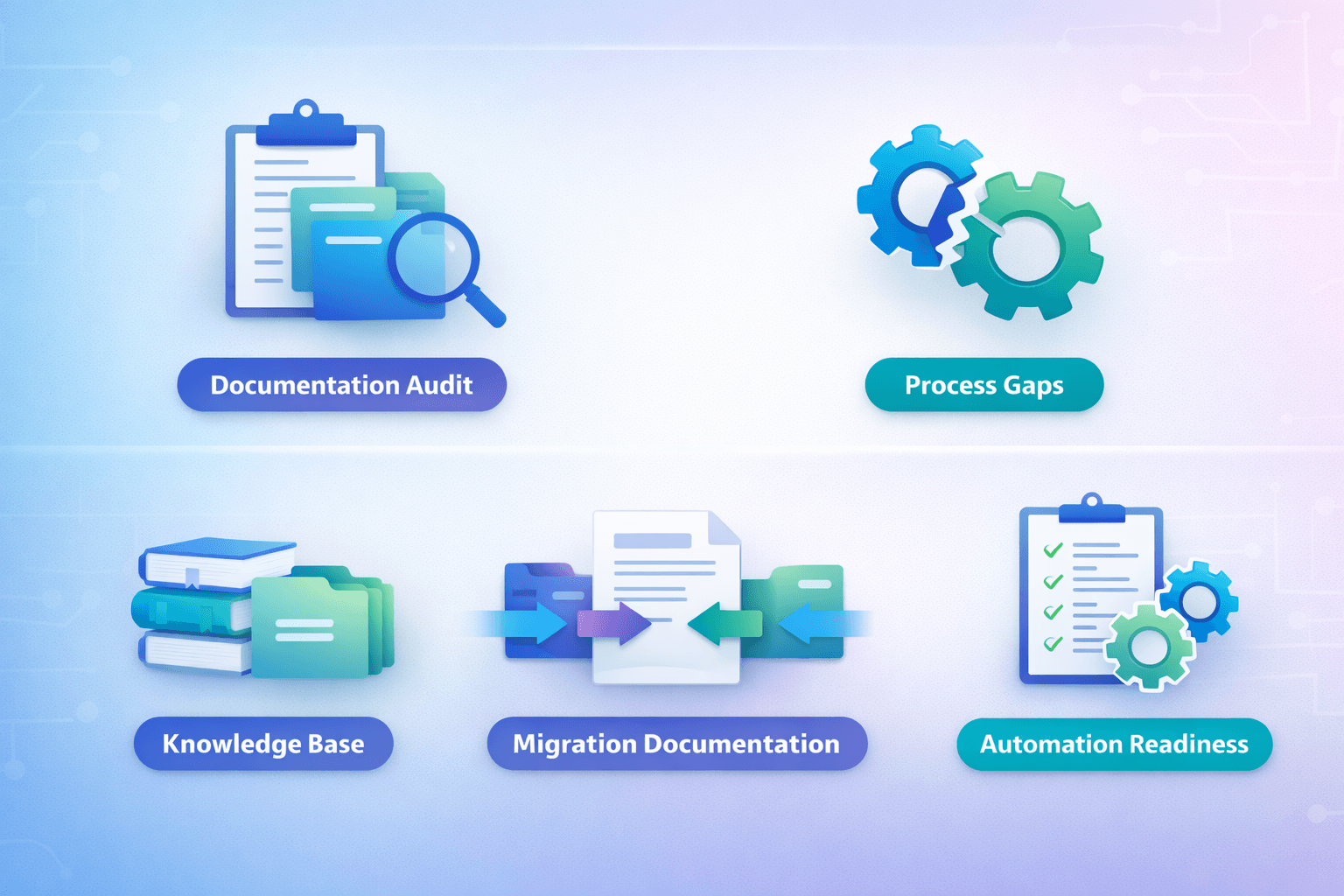
Table of Contents
Loading table of contents...
From Migration to Automation: A Documentation Framework
Part 1: Why Platform Migrations Should Start With Documentation
Platform migrations are often framed as technical upgrades: new tools, better integrations, or expanded functionality.
But in practice, migrations tend to reveal something else entirely. They show how well a company actually understands its own processes.
During a recent transition from Squarespace to Chargebee, the primary objective was to support new subscription management capabilities. However, as workflows were examined and documentation was reviewed, it quickly became clear that the migration was doing more than changing systems.
It was exposing operational gaps.
Process knowledge existed across the organization, but it wasn’t centralized or consistently documented. Some workflows were captured in slide decks, others in internal documents, and some existed primarily as institutional knowledge shared between team members.
While this approach may work during early growth stages it becomes difficult to scale, especially during system transitions.
Platform migrations require clarity. If a process cannot be clearly defined, it becomes difficult to replicate in a new system and even harder to automate later.
That’s where documentation becomes essential.
Migration as an Operational Stress Test
System transitions naturally highlight inconsistencies that might otherwise remain unnoticed. During the migration process, several common issues surfaced:
- Multiple versions of documentation describing slightly different workflows
- Undefined edge cases for subscription and billing scenarios
- Data mapping inconsistencies between systems
- Processes that depended on informal team knowledge rather than written procedures None of these issues were unusual. In fact, they’re common in growing organizations where processes evolve faster than documentation. But migrations create a moment where those inconsistencies must be resolved.
Rather than simply transferring existing workflows into the new platform, the transition became an opportunity to clarify processes and establish a more structured documentation framework.
Why Documentation Matters Before Automation
Automation is often a key motivation behind system upgrades. Businesses want to streamline recurring tasks, reduce manual work, and improve operational consistency.
However, automation depends on clearly defined processes.
If a workflow isn’t well understood or documented, automation can introduce risk rather than efficiency. Undefined exceptions, unclear responsibilities, and inconsistent logic can quickly lead to errors.
Documentation provides the foundation that makes automation possible.
When processes are structured, standardized, and clearly explained, automation opportunities become easier to identify and implement.
Introducing the Series
This article is the first in a series exploring how documentation can support successful system migrations and prepare organizations for automation.
From Migration to Automation: A Documentation Framework will walk through the practical steps involved in turning a platform transition into an opportunity for operational clarity.
Upcoming articles will cover:
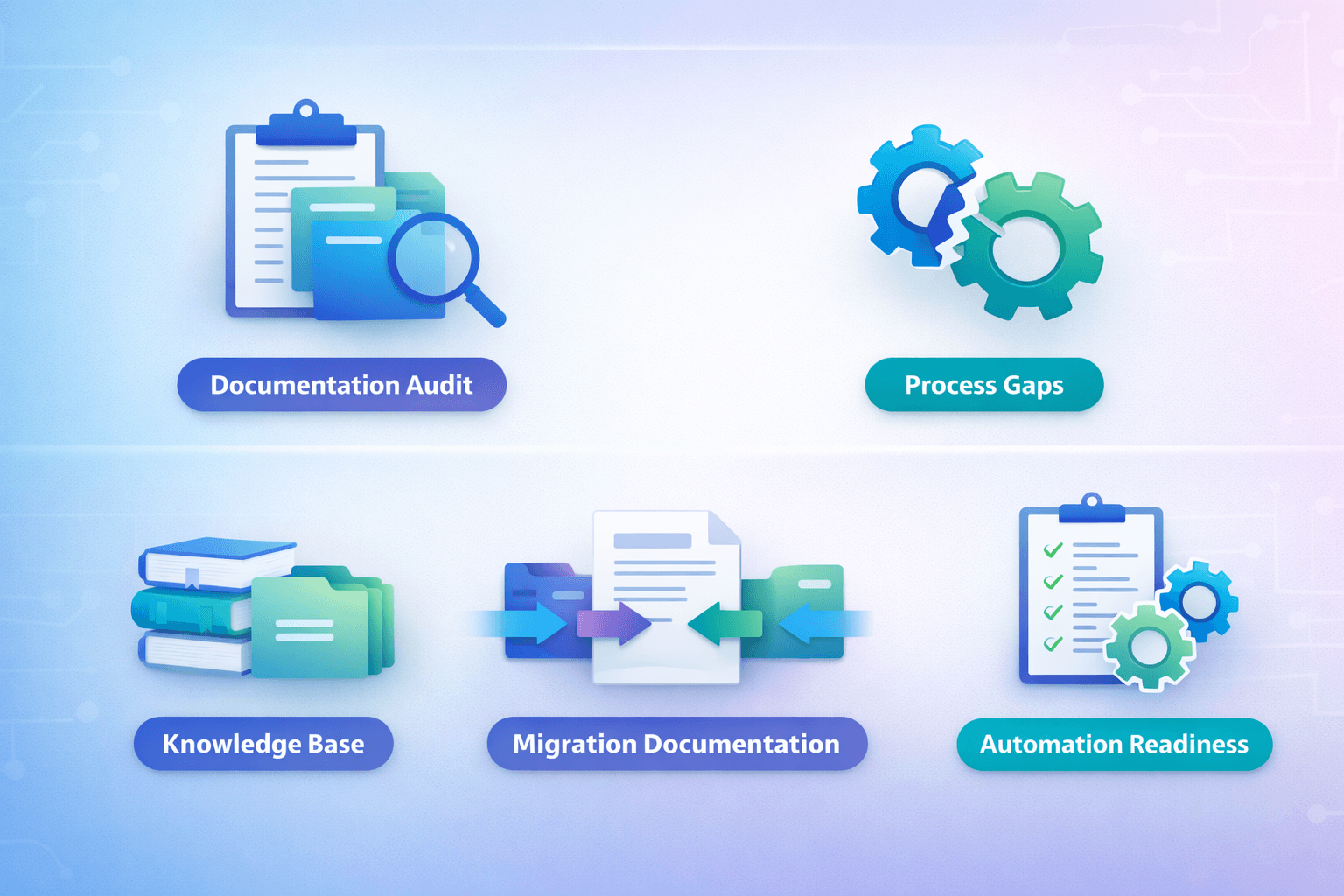
Part 2 — Auditing Existing Documentation How to identify where process knowledge lives and uncover gaps before migration begins.
Part 3 — Identifying Process Gaps During Migration Why system transitions reveal hidden workflow issues and how to resolve them.
Part 4 — Building a Scalable Knowledge Base How structured documentation systems such as Confluence can create a reliable single source of truth.
Part 5 — Documenting the Migration Itself Why capturing data mapping decisions, platform differences, and workflow changes is essential for long-term scalability.
Part 6 — Preparing for Automation How clear documentation creates the operational clarity needed to safely implement automation.
Final Thoughts
Platform migrations will always involve technical configuration, but the long-term success of those transitions often depends on something less visible: process clarity.
Organizations that invest in documentation during migration not only reduce risk during the transition but they also build a foundation for automation, scalability, and more efficient onboarding.
In the next article, we’ll begin with the first step: conducting a documentation audit to understand where operational knowledge currently lives.